
Farming in Protected Landscapes
Coppicing at Copperas Wood SSSI
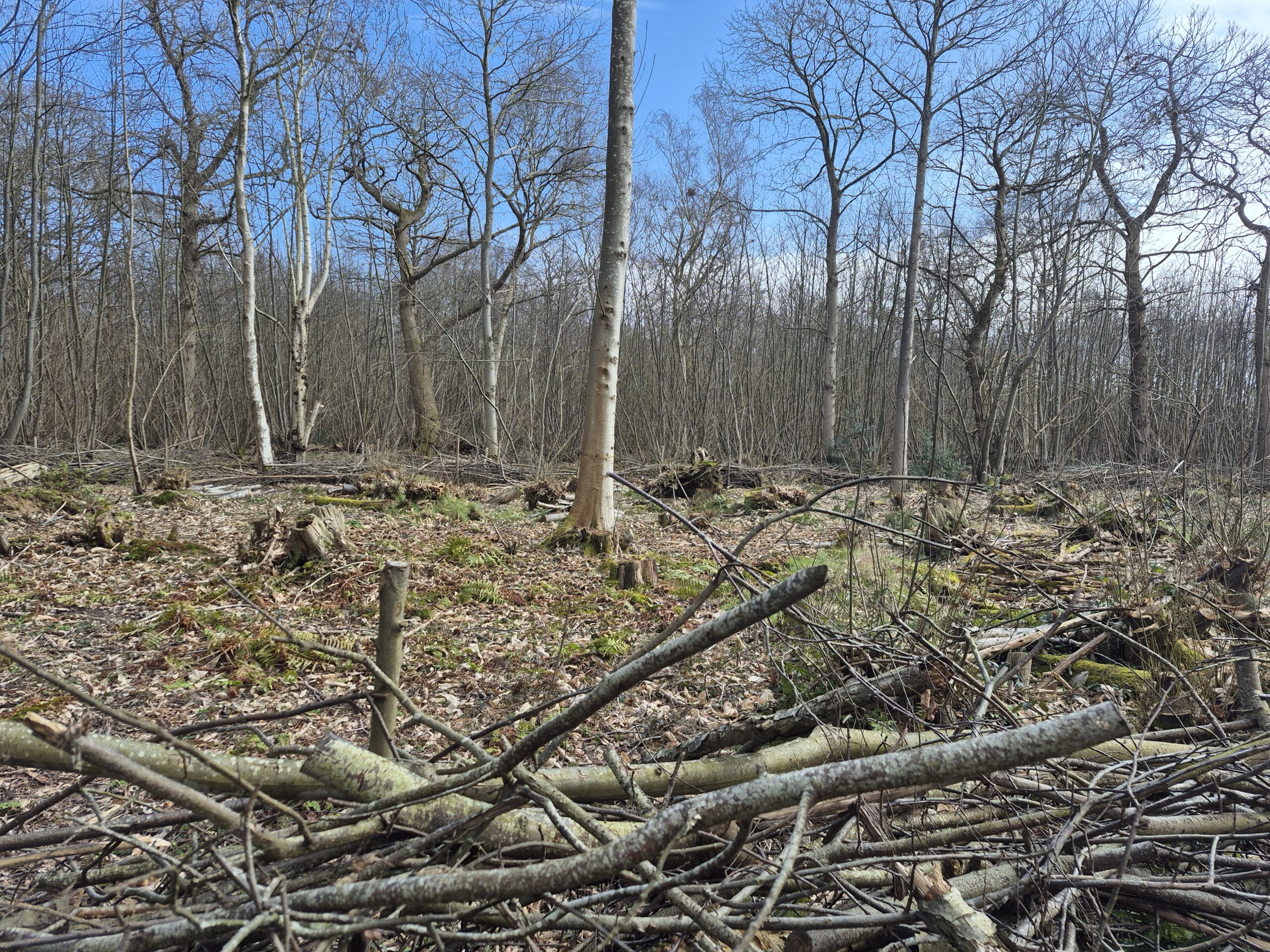
For Year 5 of the Farming in Protected Landscapes programme, £3,237 was granted to Essex Wildlife Trust to significantly increase coppicing work by adding a further 60 mature sweet chestnut stools to their volunteer’s work programme – making a significant positive impact on woodland condition at Copperas Wood SSSI.
What is a SSSI?
This stands for “site of special scientific interest”, classified under the Wildlife & Countryside Act (1981). SSSI sites are important places for wildlife and natural features in England, supporting rare and endangered species of flora and fauna, habitats and natural features.
What is special about Copperas Wood?
This ancient woodland is a Nature Reserve, on the southern edge of the Stour estuary where coastal and woodland habitats meet. The Essex Way Walk goes through Copperas Wood.
The woodland was devastated by the storm in 1987, but has grown back well and flourishes, to provide habitat for wildflowers such as Bluebell, Sweet Woodruff and Red Campion, birds such as the Lesser Spotted Woodpecker and Nightingale and butterflies such as the Oaks Purple Hairstreak.
To learn more about it and how to visit, visit the website at www.essexwt.org.uk/nature-reserves/copperas-wood.
What is coppicing and how does it benefit the woodland?
Coppicing is a traditional woodland management technique where trees are cut down to their stumps, allowing new shoots to grow up which encourages strong new growth and regeneration of the tree to extend it’s life.
One of the key benefits of coppicing is its ability to promote habitat creation. Coppiced woodlands are characterised by a mosaic of different-aged trees and shrubs,
creating a diverse range of microhabitats that support a variety of wildlife.
The open, sunny glades created by coppicing are ideal for wildflowers and other understory plants providing a greater area of wildlife rich habitat. As they produce new growth, the coppiced trees provide valuable protection for a wide range of wildlife, plants and insects.
By promoting the growth of healthy, vigorous trees, coppicing contributes to the overall health and resilience of woodland ecosystems, which are essential for mitigating the impacts of climate change.
As the Chestnut trees were cut back, the material was used to create dry hedging (where branches are stacked between wooden stakes) creating shelter for wildlife and
avoiding the use of bonfires to remove the cut branches. Straight branches were set aside to create stakes for eco-friendly fencing.
Display signs where put up whilst the coppicing work was being done to explain to visitors to the woodland what is happening in the landscape to explain it is a beneficial operation rather than a destructive one.
What was the importance of volunteers to this project?
The Wrabness volunteers play a vital role in the conservation of this site, and many others. Essex Wildlife Trust does not have a staff Warden for this site, instead, it is looked after by a volunteer warden and supported by a team of volunteers, supported by an Area Ranger. Felling of large trees cannot be done by the Wrabness volunteers. However, once felled, the much smaller coppice regrowth can be managed by volunteers with hand tools.