
Farming in Protected Landscapes
Diverse Communities, Diverse Crops
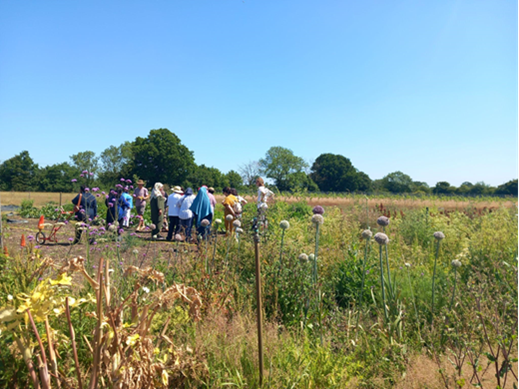
For Year 5 of the Farming in Protected Landscapes programme, £26,273 was granted to Barleybird CIC to increase diversity in Suffolk & Essex Coast & Heaths National Landscape.
Why is this work important?
Diversity brings resilience to natural systems, whether it is variety within or between crop species, and food, or within and between people in communities. Yet, agricultural crops currently being grown in and around the Suffolk & Essex Coast & Heaths National Landscapes are very limited in terms of their diversity, both within and between species.
In the same way, those visiting our National Landscapes do not reflect the cultural diversity of people living in Suffolk and Essex, particularly in the larger towns and cities. This project aimed to help address these issues to the benefit of food producers and consumers.
East Anglia’s climate is changing, with warmer temperatures creating challenging growing conditions for farmers and market gardens. However, there is also an opportunity to mitigate the impact of climate change by diversifying: developing supplies and markets for more heat tolerant, locally adapted fruit and vegetables, and shifting towards more resilient arable crops, including cereals.
What did this work involve specifically?
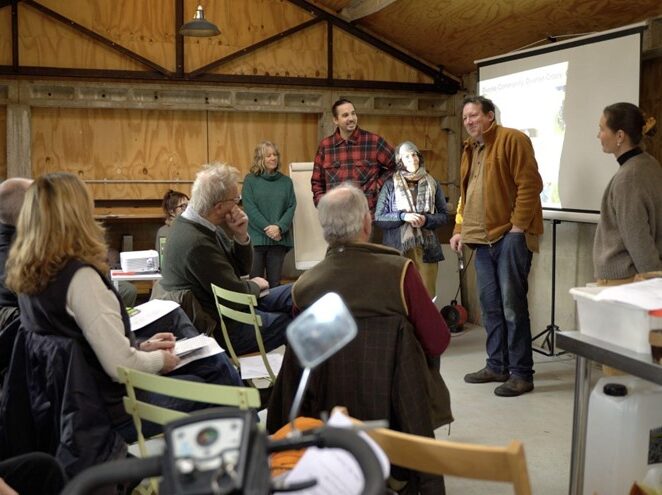
Barleybird ran a series of consultation exercises, farm visits and events involving farmers, food producers, community groups and schools to:
- Build on the research by Garden Organic in the Midlands and extend it to market gardens and farms.
- Increase the local community’s involvement in plant science.
- Evaluate plant varieties that consider people's cultural values though consultation and informal crop trials.
- Investigate how to increase access to culturally appropriate food for diverse communities.
- Pilot growing alternative crops in market gardens.
- Engage farmers with the concept of diversification of cereal crops on farms in Suffolk & Essex Coast & Heaths National Landscape.
- Strengthen urban-rural relationships.
- Create fun and engaging ways to improve some participants English language.
- Support wellbeing and create opportunities to be out in nature.
- Enable knowledge exchange and the sharing of food culture.
- Develop ideas for new routes to market.
- Create opportunity for farmers to discuss growing more diverse cereal crops in East Anglia
- Create data and learning for formal crop trials.
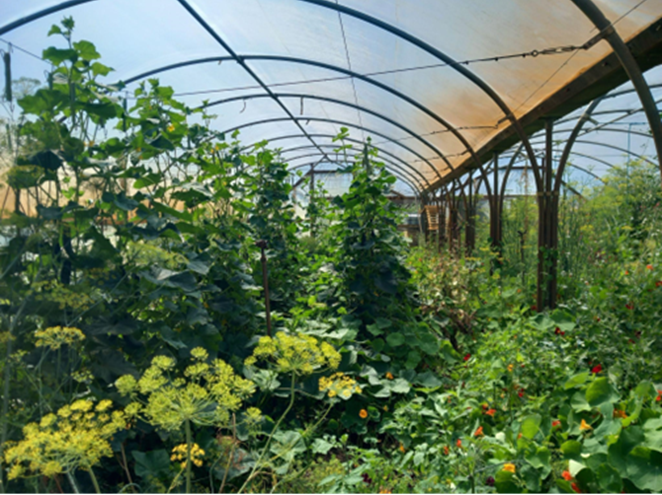
The project highlighted to farmers and the public, the opportunities for growing more diverse crops in the UK. Less commonly grown wheats in the UK can be more resilient to climate change due to their natural characteristics such as deeper rooting habits or pest and disease resistance.
Meanwhile fruit and vegetable crops which historically are grown in warmer climates will be more adapted to rising temperatures in East Anglia. This resilience will improve further through selection of high performing plants and the saving of seeds for crop trials.
How will this project benefit the community?
A key element of this project was building relationships through urban-rural community events and consultation exercises. Based on Barleybird’s experience with refugee communities last year, some of the individuals who participated came with an interest in, and knowledge of, horticulture/agriculture from their country of origin.
Many refugees do not have the legal right to work in the UK, and disparate communities may be disadvantaged from visiting the wider countryside for various reasons such as language and transport barriers. The Barleybird events provided individuals with an opportunity to learn new skills in science and agriculture for those with an interest and enthusiasm, and provided an opportunity for their existing knowledge and skills to be shared and utilised to benefit the National Landscape and surrounding region.
Workshops were held with farmers to encourage extending their range of crops to increase access to alternative grains which not only provide agronomical benefits, but also greater culinary and health benefits. These are increasingly sought by local businesses such as bakers and chefs in order to meet the demands of their customers. This group are learning from Hodmedod’s in Beccles, who have considerable experience in supporting farmers, and providing routes to market.
What did the crop trials involve?
The project included a consultation exercise with both the community consumers and farm staff. The data gathered was used to shortlist potential research crops suitable and desirable for growing in this regions’ climate, and then small scale planting to trial how the crops cope in the Suffolk climate.
Seedings including Achocha are quite easy to grow and produces large cucumber-like fruits. It originates from the Andes, the fruit can be eaten raw or cooked and it is often used in stuffing. At the end of the project, methods of cooking the diverse crops from all around the world were shared by some great cooks from within our community.